Knoxville Fire in Napa County Almost Contained

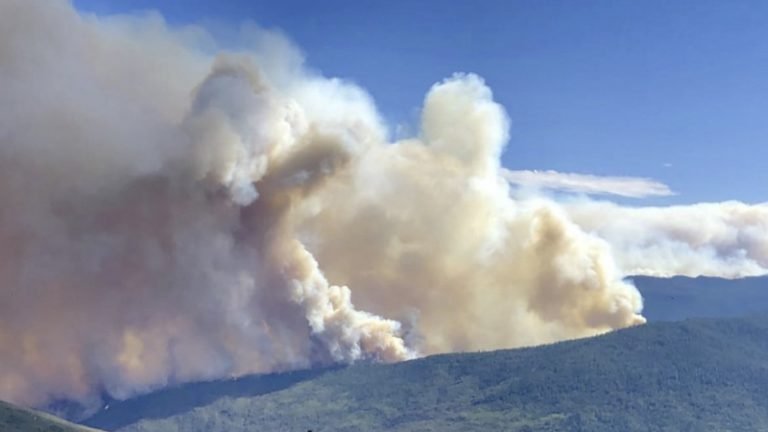
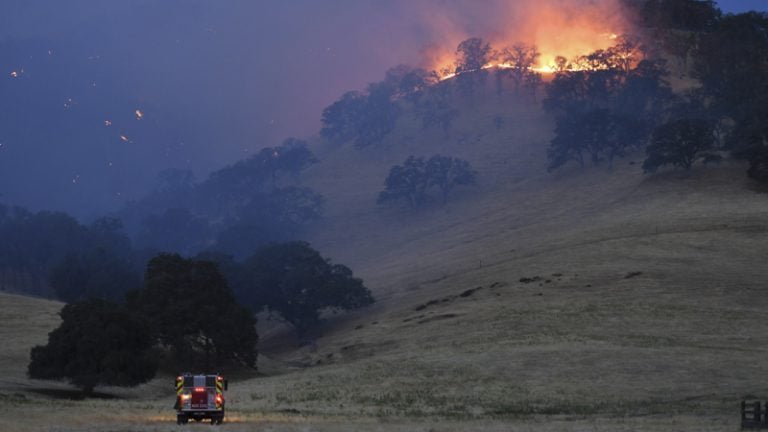
On Saturday, August 13, a wildfire known as the Knoxville fire began to blaze in Napa County.  On Sunday it gained some acreage but firefighters were able tocatch up and contain it.  So far, the fire has burned an estimated 508 acres. Fire crews have 85% of the fire contained and expect to have it fully contained by later on today. No buildings were threatened or damaged and thecause of the fire is still under investigation.  Lake Berryessa, which is located 2 miles South of where the fire began, was not impacted by the fire and is open to visitors. However, the Berryessa-Knoxville Road will be closed until noon on Monday, Aug. 15. The road is closed in two locations, according to Cal Fire – two miles north of Lake Berryessa and three miles south of the Napa-Lake County line.

A map showing the location of the Knoxville fire in Napa County.

Lion Fire in Tulare County Continues

A lightning strike is responsible for starting a fire in Sequoia National Forest/Tulare County area.  The blaze spread quickly and has burned an estimated 20,358 acres.  The fire traveled deep within the forest, which has forced fire crews to use helicopters to fly in crews and equipment.  So far, 75% of the fire has been contained and firefighters have stopped its progress by securing perimeter lines.

Forestry officials have allowed some of the fire to burn, and for a good reason.  According to Forestry officials, the fire is a good thing because the ecosystems in the Sequoia National Forest are fire dependent.  However, allowing the fire to burn has allowed smoke to travel to residential areas of Tulare County, which has negatively affected the air quality.  Because of the poor air quality, officials have stated that residents should remain indoors and they should see a doctor if they feel that their health has been threatened.  

Certain areas in Sequoia National Forest and Sequoia National Park will remain closed until further notice. Anyone planning to travel to these areas is asked to contact the Western Divide Ranger District at 559-539-2607 Monday – Friday 8 a.m. – 4:30 p.m. For those planning wilderness travels in the southern area of Sequoia National Park, call 559-565-3766.


A map showing the affected areas caused by the Lion Fire in Tulare County.


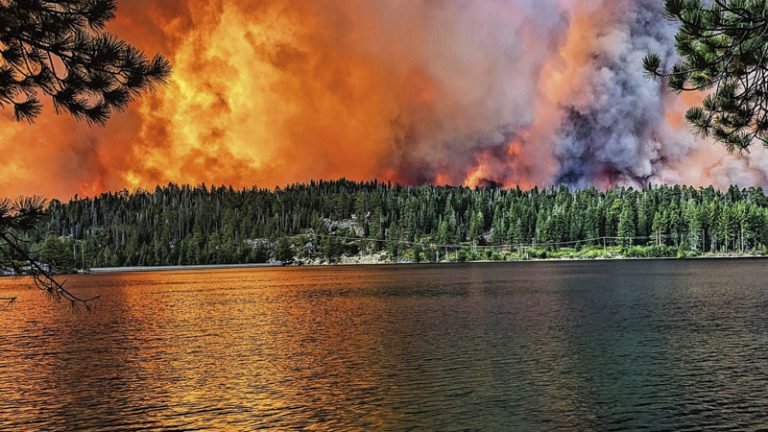
A close up of the Lion Fire affecting the Sequoia National Forest

.

Yosemite Fires

Yosemite Wildland Fires Perimeter Map


Avalanche Fire: (37 39.794 x 119 42.238; 6,400’el. Mariposa Co.)  This lightning caused fire was found on the afternoon of July 31, 2011.  The fire is at 149 acres. The fire could potentially grow to 5,800 acres.

A single standing dead tree (snag) was struck by lightning. It is located near Avalanche Creek, east of the Glacier Point Rd. and is approximately 1 mile north of the Wawona Rd. at Chinquapin.  The fire is within the park’s Wilderness boundary and will be managed for multiple objectives.  The fire is creeping and smoldering through duff and other surface fuels.  Smoke is visible from many locations along the Wawona and Big Oak Flat Roads, and from the community of El Portal.  

Combined with previous fires, roadside mechanical thinning, vegetation debris pile burning, and prescribed fires, this fire will provide a defensible fire buffer to the community of Yosemite West, Badger Pass Ski Resort, Glacier Point and other park infrastructures.  Although numerous fires have occurred in the area, the most recent being the 2009, 3,500 ac. Grouse Fire, this area has no recorded fire history.  Extensive logging did occur in the early 1900’s.  Fire crews continue to gather weather, fuel moistures and other fire data for fire managers to determine operational strategies. Wilderness values will be considered through the use of the Minimum Tool Requirement Analysis and the use of natural barriers to maintain the fire’s perimeter.

Another rational for this fire is to restore landscape resiliency in a portion of the park that has not burned in recent history.  Lightning caused Wildland fires frequently occur during the summer months in Yosemite.  Fire is a natural part of the Sierra Nevada ecosystem.  These kinds of fires have shaped the forest landscape for thousands of years.  The fire will rid the forest of an overabundance of dead and down surface fuels and smaller diameter shade tolerant trees. Wildland fires create open spaces (mosaics) within dense forest, allowing sunlight to penetrate the forest floor.  The fire will enhance wildlife habitat and the ability of animals to move through the forest.

These goals are consistent with the current Yosemite Fire Management Plan and Environmental Impact Statement. 

Smoke will be visible.  Yosemite’s Division of Resources and Sciences crews have installed air quality monitoring equipment within the communities of Yosemite West, El Portal and Yosemite Valley.  Fire managers are working closely with the Mariposa County Air Pollution Control District concerning potential air quality impacts.

The Gilman Fire in Riverside is Fully Contained

Riverside County firefighters successfully battled the Gilman Fire over the weekend, reaching full containment on August 7th around 6 p.m. Covering 945 acres of vegetation near Moreno Valley, the fire is located in a remote area and never threatened any structures. The 2-mile stretch of Highway 60 that had to be closed while firefighters battled the flames reopened on Sunday. Several firefighters required medical treatment for smoke inhalation. The fire's origin remains under investigation.

Forest Practice


The California Department of Forestry and Fire Protection (CAL FIRE) enforces the laws that regulate logging on privately-owned lands in California. These laws are found in the Forest Practice Act which was enacted in 1973 to ensure that logging is done in a manner that will preserve and protect our fish, wildlife, forests and streams. Additional rules enacted by the State Board of Forestry and Fire Protection are also enforced to protect these resources.

CAL FIRE ensures that private landowners abide by these laws when harvesting trees. Although there are specific exemptions in some cases, compliance with the Forest Practice Act and Board rules apply to all commercial harvesting operations for landowners of small parcels, to ranchers owning hundreds of acres, and large timber companies with thousands of acres.

The Timber Harvesting Plan (THP) is the environmental review documents submitted by landowners to CAL FIRE outlining what timber he or she wants to harvest, how it will be harvested, and the steps that will be taken to prevent damage to the environment. THPs are prepared by Registered Professional Foresters (RPFs) who are licensed to prepare these comprehensive, detailed plans. THPs can range from about 100 pages to more than 500 pages.

CAL FIRE does not have the authority to deny a THP that is in compliance with state and federal rules and laws, simply because the logging plan is unpopular with the public. The Department reviews and approves between 500 to 1400 THPs each year. A THP that does not comply with all forestry and environmental regulations is returned to the RPF. It is only approved after the RPF and landowner agree to make the changes necessary to ensure compliance with all laws. CAL FIRE follows-up on approved THPs with site inspections and can shutdown operations, cite or fine Registered Professional Foresters, Licensed Timber Operators (LTOs), and landowners if illegal operations are found.


Mendocino County: Pass Fire Still Under Investigation

A fire that started on August 3rd in Mendocino County continues to burn today.  The blaze spread over 617 acres and injured one person.  The fire is located on Hams Pass Rd. and Hulls Mountain area, Northeast of Covello.  No structures have been been damaged and fire crews claim to have 97% of the fire contained.  They will continue to improve containment by putting out hot spots and holding fire lines.  Full containment of the area is expected later today.  The cause of the fire is unknown and remains under investigation.   The cost to date is estimated to be around $2.6 million

Governor Brown Issues and Executive Order to Prevent Wildfire

Today Governor Brown issued an Executive Order that he hopes will provide state agencies and departments with the necessary resources to prevent California wildfires. In spite of increased precipitation, wildfire season is fast approaching, and Governor Brown hopes to prevent disastrous fires by increasing fire education and fire fighting resources. Among some of the changes this development will institute, the California Department of Corrections and Rehabilitations will prioritize assigning minimum-custody inmates and wards to Conservation Camp Fire Crews. 

The “Giant Fire” Continues Near the Trail of 100 Giants

The "Giant Fire" began on July 20th and continues to burn the Long Meadow Giant Sequoia Grove on the Western Divide Ranger District, Giant Sequoia National Monument. The cause of this fire remains under investigation. The fire is contained, but as it is too dangerous for fire fighters to enter certain areas to extinguish smoldering embers, pockets of fuel on the ground are predicted to maintain the fire until it rains.

Though the fire has burned within 50 feet of the Trail of 100 Giants, visitors are still permitted to walk the trail during the day. The fire behavior is unthreatening to public safety, and, consequently, rangers are using this wildfire to teach visitors about the benefits of fire for the giant sequoia trees. This fire may promote the growth of new sequoia trees by reducing competing vegetation, exposing mineral soil, and dispersing seeds by opening up the sequoia cones. 

Unlike the Lion Fire presently ecologically benefiting the Golden Trout Wilderness, efforts are being made to extinguish the Giant Fire, despite its advantages. This decision was made both because the rangers are already preoccupied with the Lion Fire, and because and they wish to prevent the trail from closing.

Lightning Starts 14 Fires Throughout Madera and Mariposa Counties

On July 31st, 2011 multiple lightning strikes sparked 14 fires: 8 in Madera County and 6 in Mariposa County.  The largest of the fires is Hensley Fire, which is located northeast of Madera and burning 95 acres.  All fires are located in remote areas with which has made it difficult for fire crews to access.  Currently, all forward progress of the fires have been stopped and no damage to any structures has been reported. Fire crews and assisting agencies from other counties will remain in the area until all fires are controlled.  

Rising temperatures and drying trends in the regions make the next few days critical.  Aircrafts are expected to fly above the affected regions today and search for any new fires.  

Conditions of other fires in Madera and Mariposa County:

Bailey Fire: 10 acres

Silver Fire: 3 acres

Grove Fire: 10 acres

*all forward progress of fires have been stopped

Eagle Fire in San Diego County To Be Contained By Saturday

San Diego County is currently battling a fire in Los Coyotes Reservation near Warner Springs.  The fire began on July 21st around 10 p.m. and fire crews expect to have it fully contained by Saturday, July 30th.

The fire was started by arson and has burned 14,100 acres.  A shack located near the Eagle Rock Training Center was the only building that burned.  The blaze began when the building was set on fire last night around 10 p.m.  The facility is privately owned and used for military training and by Hollywood film crews.  17 injuries have been reported and the estimated cost for fighting the fire is $14 million.  

As of this morning, fire activity is minimal with 90% of the fire contained.  According to CalFire, the remaining fire crews will continue to monitor the fire perimeter and construct control lines.